.webp)
.png)
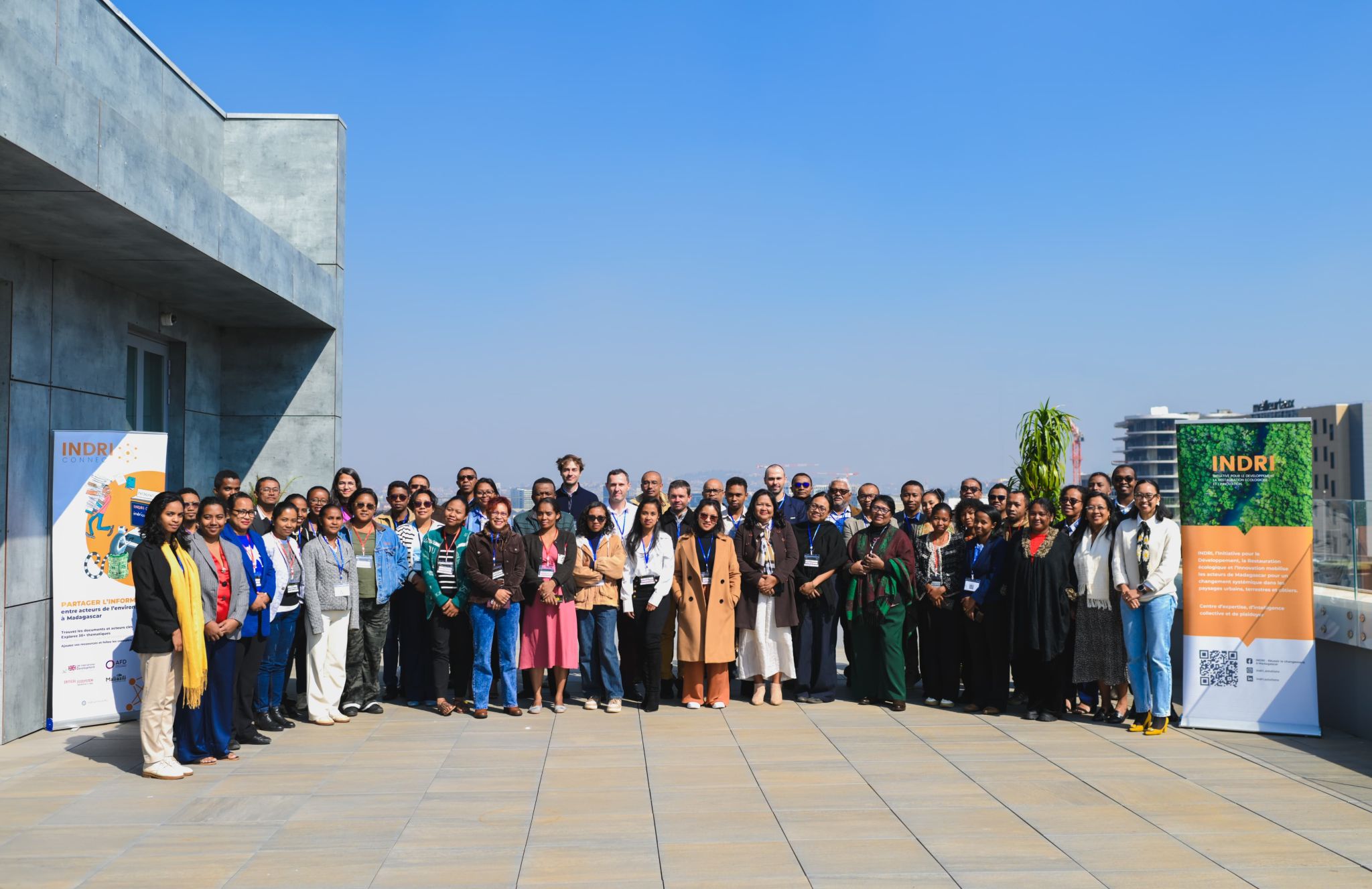

Nine out of ten Malagasy households still cook with wood or charcoal. Demand is rising, resources are dwindling, and prices are following suit. On June 19, more than sixty representatives from public institutions, the private sector, civil society, youth groups, the research community, and technical and financial partners gathered at the initiative of INDRI to avert a looming social crisis. Bôndy was represented by Adrian Levrel and Rindra Razafimanantsoa, focusing on clean cooking. Here is the diagnosis from the workshop and Bôndy’s contribution.
A crisis that won't give a second warning
The core of the problem can be summarized in three points. Demand for wood energy is rising with population growth. Wood resources are shrinking under the combined pressure of logging and land conversion. In major cities, the price of a bag of charcoal keeps climbing. If this trajectory is not altered, the next major social tension in Madagascar could well be over cooking fuel—the energy source used daily by 90 to 97% of households, with an estimated 200,000 hectares of deforestation per year attributed solely to the wood energy sector.
This was the diagnosis presented by INDRI (Initiative for Development, Ecological Restoration, and Innovation) following the June 19 session. The word "crisis" is not used for dramatic effect; it describes a situation where three trends are converging without any effective large-scale regulatory mechanism in place.
Four paths, one political horizon
The workshop, organized with CIRAD and the DIABE 2 project—funded by the European Union under the AFAFI Centre 2 program and implemented by the consortium of Planète Urgence, AIM, Partage, Cirad, ECO Consult, and the AFD—helped align stakeholders around four complementary paths.
Energy-focused reforestation aims to establish managed wood resources alongside natural forests, planted and harvested according to a defined cycle. The goal is not to restore biodiversity—which no dedicated plantation can do—but to divert logging pressure toward areas specifically designed for this purpose.
Sustainable charcoal and improved carbonization address the most wasteful link in the chain. A traditional kiln has a yield of around 15%, meaning half the energy contained in the wood goes up in smoke before reaching a cooking pot. Improved techniques documented in scientific literature reach 25 to 30%. For the same volume of output, that means half as much wood is harvested.
Credible alternatives cover a broad spectrum: improved cookstoves, briquettes made from residues, biogas, electric cooking, and liquefied petroleum gas. This is the only lever that addresses demand at its root, but it is also the slowest to deploy because it involves household equipment and purchasing power.
Data and planning, finally, represent the least visible yet most structural path. Without reliable mapping of available resources, demographic projections, and monitoring of actual consumption, none of the other three paths can be properly scaled. INDRI announced that a quantified and sequenced action plan will be produced in the coming months, with the explicit ambition of placing the issue on the agenda for the 2027 presidential campaign.
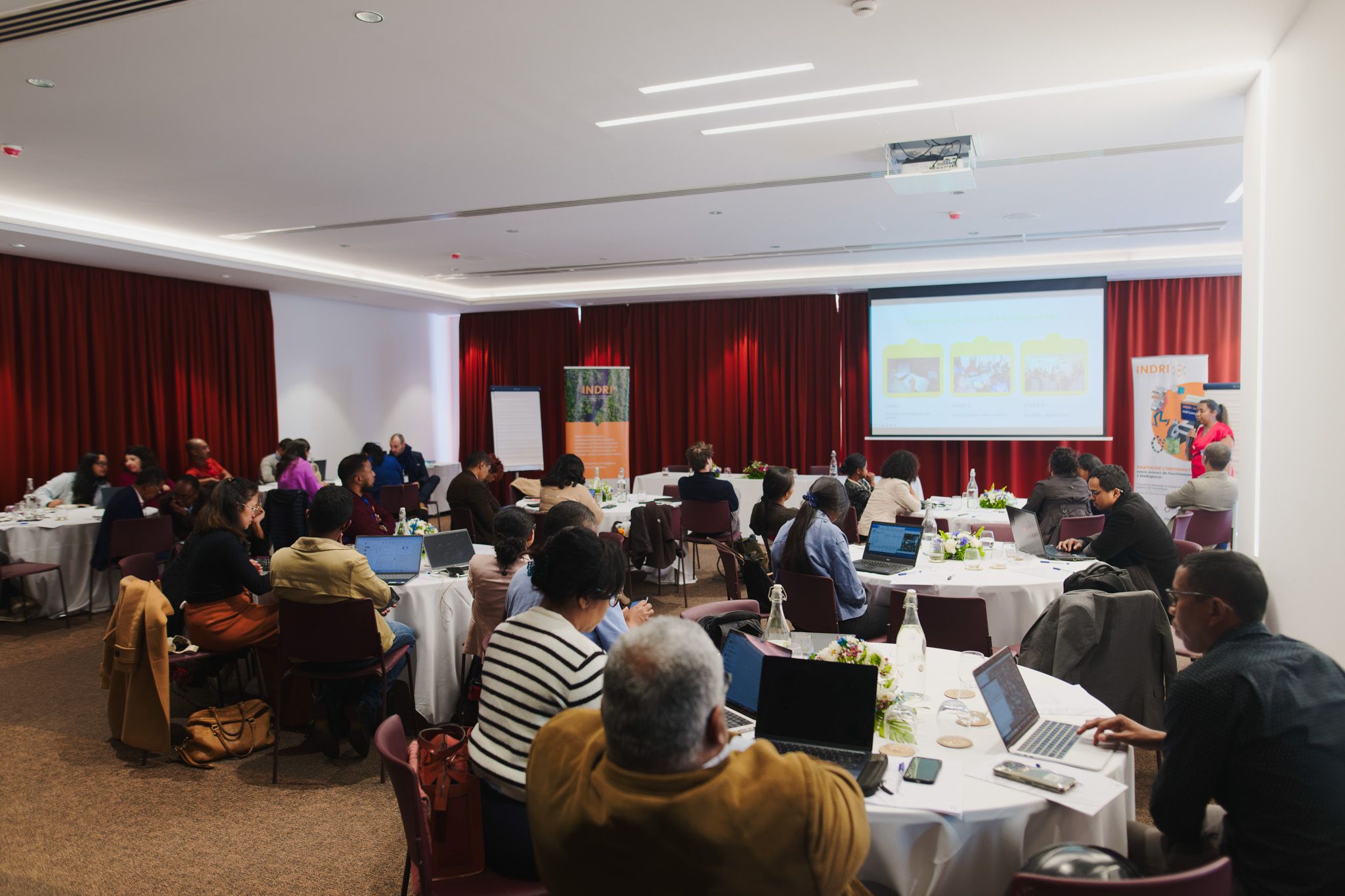
Bôndy’s contribution to the workshop
Of the four paths discussed on June 19, Bôndy’s participation focused specifically on the third: credible alternatives.
Tackling demand at its root with Clean Cooking for Madagascar. Bôndy Africa, a joint venture founded with VNV, is deploying a solution that directly addresses the problem identified by INDRI: equipping 500,000 households by 2030 with Bôndy Wood improved cookstoves for rural areas and Bôndy Charcoal stoves for suburban areas, with fuel savings measured between 50 and 60%. The model relies on decentralized manufacturing by local artisans trained in mobile workshops and aims for Tier 3 status under international performance standards. Prototypes are validated against three requirements: mineralogical characterization of raw materials, mechanical and thermal resistance, and combustion optimization to reduce fine particles. This last dimension is no minor detail: smoke from indoor wood burning remains one of the leading causes of respiratory illness in rural Madagascar, with a burden that falls primarily on women and children.
Regarding the second track, improved carbonization, Rindra Razafimanantsoa clarifies: the subject is under consideration at Bôndy, but not yet underway. Our plots will soon produce planted energy resources; if this is carbonized in kilns with only 15% efficiency, half of our efforts will go up in smoke. On this front, synergies must be built with operators who already possess this expertise, such as Planète Urgence in DIABE 2 or CIRAD.
Furthermore, outside of this workshop
Independently of this workshop, Bôndy is leading two initiatives that overlap with the issues discussed on June 19th.
Planting with end-use in mind, not just carbon stocks. On the reforestation front, our agroforestry model produces timber, controlled wood energy, and food crops on the same plots. This combination creates a concrete alternative for the community surrounding a plot, reducing the need to harvest from the nearby forest. What theory calls an economic buffer zone, those on the ground call something simpler: having a way to make a living other than by cutting down the forest. Conversely, a plot that only produces sequestered carbon, without providing tangible income for its neighbors, will see pressure return sooner or later.
Producing data that is useful beyond mere reporting. On the data front, Bôndy is already contributing, almost inadvertently. Each hectare we plant receives a unique identifier, a cryptographic footprint locked on the Cardano blockchain, and a survival history measured at six and then eighteen months. This granularity, produced to report to our funders, also serves national planning. Any public policy on wood energy needs to know, at the plot level, what has been planted, what has survived, and what has produced. There are few private operators capable of providing this information. Each one helps lighten the state's documentation burden.
One building block among others, but firmly in place
No private company will solve Madagascar's wood energy crisis alone. Implementing the four tracks proposed by INDRI requires a joint commitment from the state, multilateral funders, NGOs, and the private sector, within a policy framework that does not yet exist at the necessary scale. Bôndy's contribution to this workshop was focused on clean cooking. Outside of this framework, it is complemented by projects on reforestation and data that address the same issues without being a direct response.
This is what we do, plot by plot, stove by stove. It is also the only legitimate reason to attend this type of workshop: to share what works in the field, hear about the obstacles elsewhere, and adjust our own practices accordingly.
Bôndy designs and implements agroforestry, ecosystem restoration, and clean cooking projects in Madagascar, in partnership with local communities. To discuss this further, please contact us.



.jpeg)

.png)

.jpeg)


.jpeg)


.jpeg)


.png)


.webp)